Why “Wellness + Green + Smart” Homes Are Gaining Huge Value in 2025?

Discover why Wellness + Green + Smart homes are becoming the top choice in 2025. Learn what features buyers want and why these future-ready homes cost more.
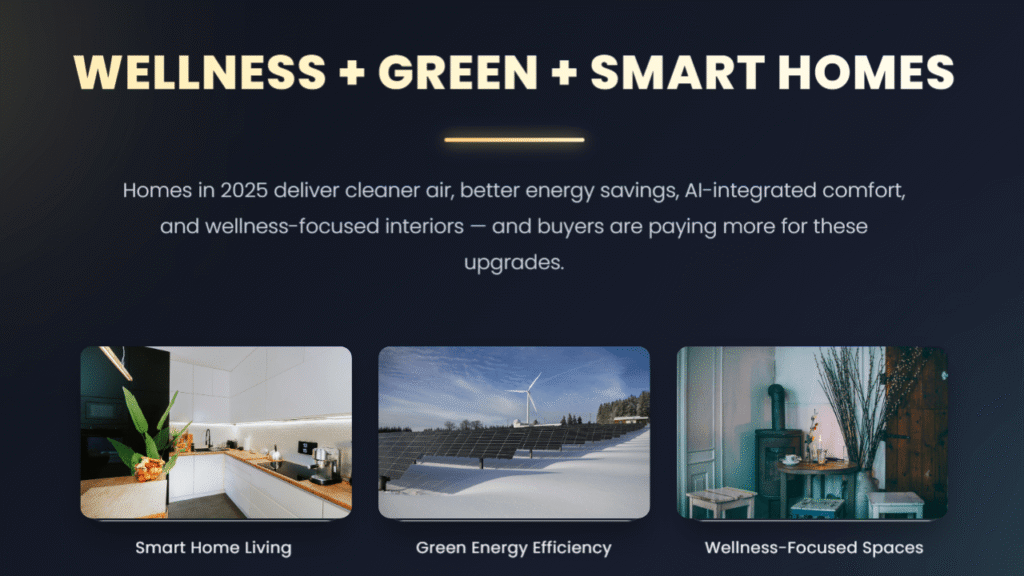
Future of Living

Why "Wellness + Green + Smart" Homes Are the New Premium Standard 🏡

In 2025, homebuyers are increasingly looking beyond mere square footage and location. The emphasis has shifted toward living environments that cater to long-term health, sustainability, convenience, and future-proofing.

Homes that combine wellness, green building, and smart tech — let's call them "WGS homes" — are becoming the most coveted, because they deliver a more holistic living experience.

🚀 What's Driving the Demand?

Growing Awareness of Health & Well-being

With urban lifestyles, poor outdoor air quality, and rising health concerns, buyers care deeply about indoor environment. Homes designed with wellness in mind address those needs.

According to recent reporting, worsening air pollution in some Indian cities has already pushed demand for wellness-focused homes.

Better Long-term Cost Savings & Sustainability

Energy- and water-efficient homes save money month after month. Features like solar panels, rain-water harvesting, and efficient insulation lower utility bills and reduce environmental footprint.

Smart Home Convenience & Future-proofing

Smart home technologies are increasingly integrated into modern homes. These reduce waste, boost comfort and convenience, making life easier and more efficient.

Boosted Resale/Rental Value & Buyer Demand

Market data shows that homes built with eco-friendly and smart features tend to sell faster and command higher premiums compared to traditional homes.

Lifestyle Expectations & Shift in Priorities

The understanding of "luxury" in 2025 has evolved: peace of mind, health, sustainability, and convenience are the new luxury.

📦 What Buyers Are Actually Paying For: Features That Matter

Here's a breakdown of WGS features that add real value in 2025, and why they matter.

Feature / Aspect Why It Matters / What Buyers Get
Solar power & renewable energy systems Reduces electricity bills significantly; lowers reliance on the grid; more sustainable.
Energy-efficient insulation, windows, HVAC & appliances Keeps indoor climate stable; cuts heating/cooling costs; improves comfort.
Water-conservation systems Saves water, reduces bills, promotes sustainable consumption — especially important where water is scarce.
Green spaces, vertical gardens & biophilic design Better indoor air quality, mental wellness, connection to nature; healthier living for families.
Smart home automation & IoT integration Convenience, control, real-time optimization — lowers waste, increases comfort, and can lower operating costs.
Support for future needs Future-proofing: as lifestyles and regulations evolve (EV adoption, stricter energy norms), these homes stay relevant.
Wellness-oriented amenities & design Improves overall living quality — especially for families, people with allergies, or health-conscious buyers.

🧑‍💡 What This Means for Buyers (Especially in 2025 and Beyond)

💰 Lower Running Costs

Over months and years, energy, water, and maintenance bills tend to be significantly lower in WGS homes — meaning savings beyond just the sticker price.

❤️ Health & Comfort as Baseline

Wellness is not a luxury anymore, but increasingly a baseline expectation. This is especially relevant in crowded or polluted cities.

📈 Good Resale/Rental Potential

As demand grows, WGS homes are likely to outperform traditional homes in resale or rental markets.

🔮 Future Readiness

With rising awareness about environment, energy regulations, and technology adoption (like EVs), these homes are better prepared for future lifestyle shifts.

🌱 Value for Conscientious Buyers

For buyers who care about environment, sustainability, and long-term costs — WGS homes make sense in terms of values and economics.

🔮 What This Trend Means for Developers, Investors & the Market

  • Developers and builders who offer WGS-ready homes will likely see stronger demand, quicker sales, and better margins.
  • Real estate in areas where green infrastructure and smart-home adoption are prioritized may appreciate faster.
  • As more people prioritize health, sustainability, and convenience, WGS homes blur the line between "necessity" and "premium."
  • Long-term, this could shift overall housing standards: more green building codes, smarter communities, and emphasis on quality of living.

The New Definition of Home Value

"In 2025 and beyond, quality home value is no longer just about space and location."

The rise of wellness-oriented, eco-conscious, smart-enabled homes indicates a shift — buyers now pay for lifestyle security, efficiency, and long-term well-being.

If you are planning to buy a home — think beyond walls and rooftops. Evaluate whether the home supports health, sustainability, comfort, and future-readiness. That's where true value lies now — and will increasingly lie ahead.